Short answer: If you’re planning your 2027 marketing budget, consider allocating 35–40% to original, authority-driven content, 30–35% to third-party proof, 12–17% to technical crawlability and AI readiness, 8–12% to measurement, and 4–8% to experimentation.
These five investment areas provide a practical starting point for brands looking to improve visibility across Google, ChatGPT, Perplexity, Gemini, and other AI-powered discovery platforms.
Here’s the reality: search is changing, and marketing budgets need to catch up.
People aren’t just searching Google, clicking ten blue links, and making decisions anymore. They’re asking AI assistants to compare products, recommend tools, explain complex topics, and shortlist vendors.
That changes the game for founders and marketing teams.
Your brand needs to do more than rank on Google. It needs to become discoverable, credible, and relevant across the sources AI-powered search experiences use to generate answers.
But here’s the question most founders haven’t properly addressed:
Where should you actually spend your AEO budget in 2027?
Should you invest more in content? Build backlinks? Get mentioned on Reddit? Improve technical infrastructure? Or start tracking AI citations?
The answer isn’t one tactic. It’s a combination of five investments.
This playbook breaks down how to allocate your budget, what deserves investment, and how to turn AEO from another marketing experiment into a measurable growth strategy.
TL;DR: The 2027 AEO Budget Breakdown
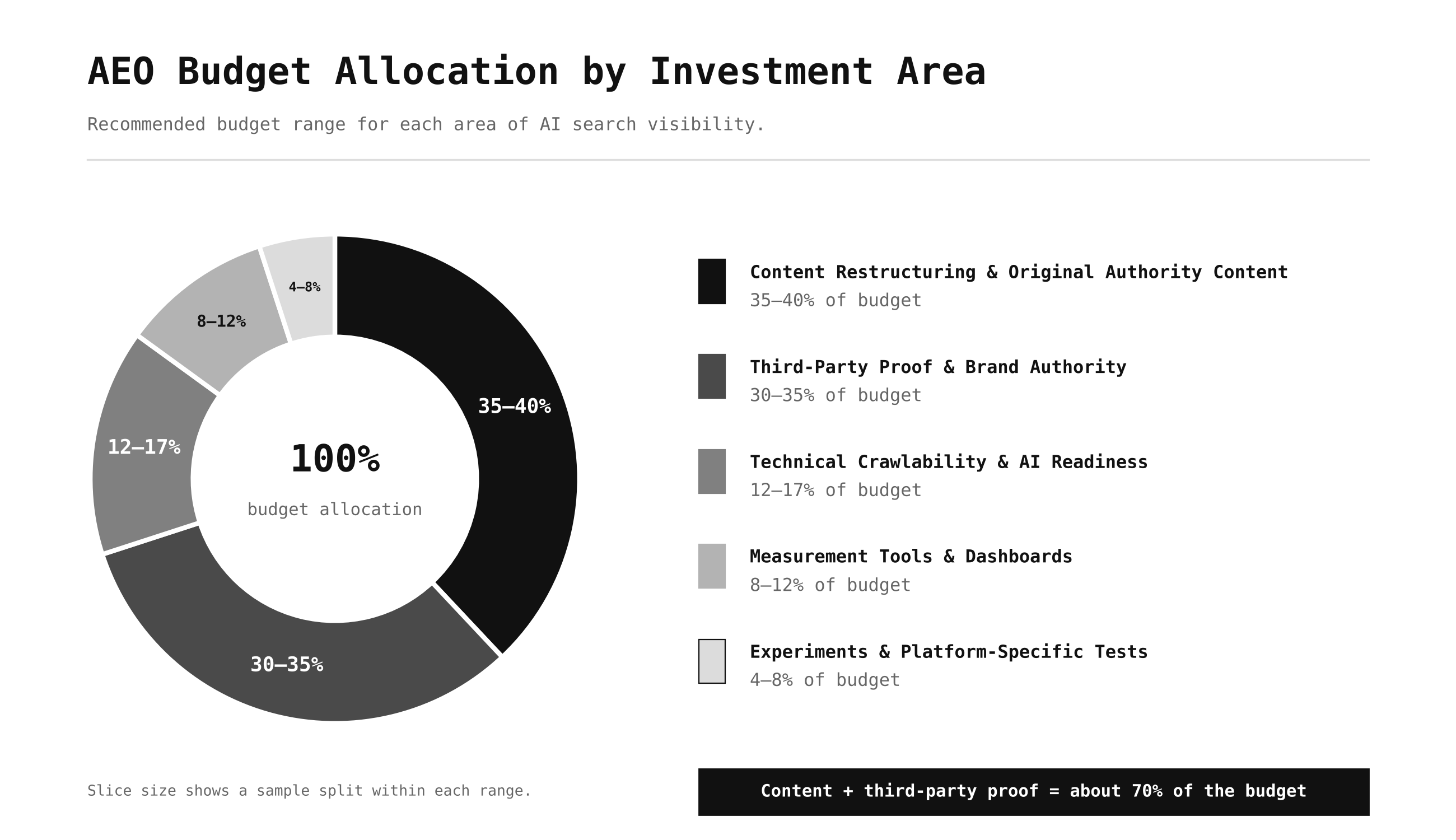
These are recommended planning ranges, not verified industry-wide spending averages. Your actual allocation should depend on your company’s growth stage, existing visibility, and technical maturity.
The Five-Bucket AEO Budget Framework for 2027
Let’s get into the five areas where your marketing budget can make a difference.
1. Content Restructuring & Original Authority Content (35–40%)
Content remains one of the biggest investments in an AEO strategy.
But publishing more blogs isn’t the answer.
In 2027, brands need content that actually contributes something useful to a topic. That means moving beyond generic keyword-focused articles and investing in original insights, research, expert knowledge, and content that answers real buyer questions.
AI-powered search experiences retrieve and synthesize information from multiple sources. Your content needs to make its expertise, evidence, and answers easy to understand.
Here’s where your money should go.
Answer-first content
Stop making readers scroll through five paragraphs before they find the answer.
Structure your content around the question people actually ask.
For example:
- What is enterprise AI orchestration?
- How does AI agent governance work?
- Which AI automation platform is best for insurance companies?
- What is the difference between AEO and GEO?
Start with a direct answer. Then explain the reasoning, add examples, and support your claims with relevant evidence.
This approach improves usability and creates clearly structured information that retrieval systems can interpret.
Original research and proprietary data
This is where brands can create a real competitive advantage.
If ten competitors publish the same generic guide, why should an AI system or a reader choose yours?
Give them something different.
Invest in:
- Original industry surveys.
- Proprietary benchmark reports.
- First-party customer research.
- Product performance studies.
- Expert interviews.
- Original datasets and methodologies.
- Industry-specific research.
For example, instead of publishing another article about AI search trends, analyse 250+ real SaaS queries across multiple AI platforms and publish your findings.
Original research gives other websites, publications, and industry experts something meaningful to reference.
Read also: AI Visibility Content Writing Strategy
Build topical coverage, not isolated blog posts
One blog cannot establish expertise across an entire industry.
Build a connected content ecosystem around the topics your audience cares about.
Prioritize:
- Topic clusters and pillar pages.
- Product comparison pages.
- Alternatives and competitor pages.
- Industry-specific landing pages.
- Technical documentation.
- Implementation guides.
- Pricing and ROI resources.
- Glossaries and educational content.
For B2B SaaS brands, technical documentation deserves particular attention. Buyers often ask AI assistants about integrations, deployment options, security, compliance, and implementation requirements before booking a demo.
Content formats worth investing in
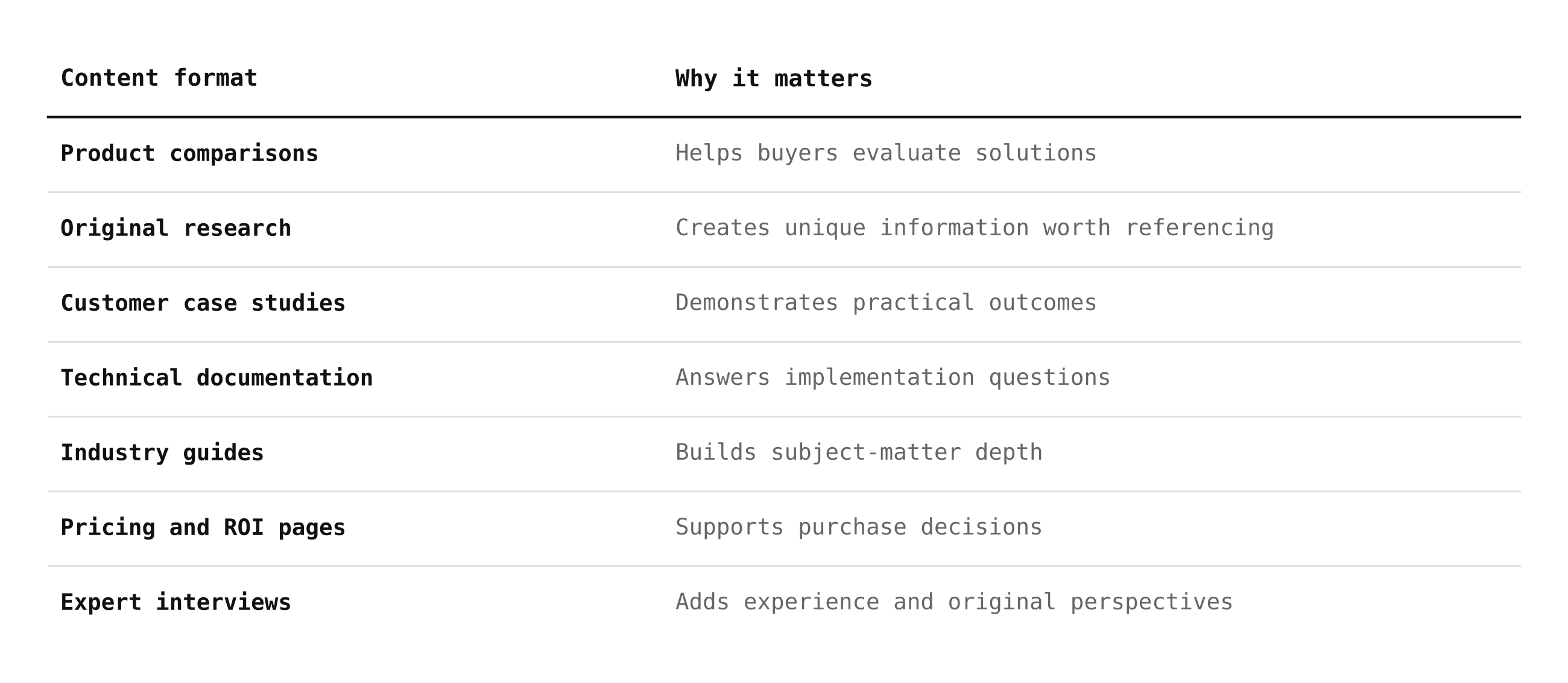
The takeaway: Don’t measure your content investment by how many articles you publish. Measure it by the quality of information you create, the questions you cover, and the value your content provides.
2. Third-Party Proof & Brand Authority (30–35%)
Here’s something many marketing teams underestimate: your website isn’t the only place where your brand reputation is being built.
Potential customers research your company across review platforms, industry publications, social communities, comparison websites, and independent discussions.
AI-powered discovery experiences can also surface information from these external sources.
That’s why third-party proof deserves a significant part of your AEO budget.
Review platforms
Build a consistent presence on relevant review websites.
Examples:
- G2
- Capterra
- TrustRadius
Focus on collecting genuine customer feedback, improving product information, and responding to customer concerns.
Don’t chase review volume through artificial incentives or manufactured feedback. Authenticity matters more than inflated numbers.
Read also: Your Page Has the Keyword. Does It Answer the Questions Behind the Search?
Analyst coverage
For enterprise brands, independent analyst research can provide valuable category context and market credibility.
Explore relevant opportunities with organizations such as:
- Gartner
- Forrester
- IDC
Depending on your category and eligibility, this could include research participation, market evaluations, analyst briefings, and industry reports.
The objective isn’t simply to get a logo on your website. It’s to build a credible external presence that helps buyers understand your market position.
Digital PR and earned media
Invest in getting your expertise and original research in front of relevant industry audiences.
Useful activities include:
- Founder interviews.
- Expert commentary.
- Industry research announcements.
- Data-driven media pitches.
- Guest contributions.
- Relevant publication partnerships.
A strong digital PR strategy should focus on meaningful coverage rather than collecting random backlinks.
Reddit and community visibility
Your potential customers are already asking questions in online communities.
They discuss product problems, compare vendors, share experiences, and recommend tools.
Relevant platforms include:
- Reddit.
- Quora.
- Hacker News.
- Indie Hackers.
- Industry-specific forums.
For example, if someone asks about the best enterprise automation platform, a genuinely useful discussion about evaluation criteria, implementation challenges, and product limitations can contribute to the information available to potential buyers.
Participate naturally. Avoid fake recommendations, promotional spam, and coordinated discussions designed to manipulate visibility.
Video and audio authority
Don’t limit your authority-building strategy to written content.
Explore:
- Independent YouTube product reviews.
- Product comparison videos.
- Podcast interviews.
- Expert discussions.
- Industry webinars.
- Product walkthroughs.
These formats create additional discovery opportunities and help potential customers understand your product from different perspectives.
The takeaway: Your website tells people what your brand claims to do. Independent sources help people evaluate those claims.
Build a consistent presence across the platforms and publications your target audience actually trusts.
3. Technical Crawlability, Schema, Feeds & Agent Readiness (12–17%)
Let’s talk about the infrastructure behind AI visibility.
You can publish excellent content and build external authority, but technical problems can limit how effectively search engines and AI-powered systems access and interpret your website.
This is why technical readiness deserves its own budget.
There are four areas to prioritize.
Schema markup
Implement relevant structured data using JSON-LD.
Depending on your website and content type, this may include:
- Organization.
- SoftwareApplication.
- BreadcrumbList.
- Article.
- Product.
- FAQPage.
- HowTo.
Structured data helps search engines understand your website’s entities, content types, and relationships.
Make sure schema properties accurately reflect visible page content and follow the relevant platform guidelines.
Remember: structured data helps communicate information. It does not guarantee AI citations or enhanced search visibility.
Structured feeds
Make your business and product information easier for supported systems to ingest.
Depending on your business model, invest in machine-readable product, service, and content feeds.
Maintain consistency across:
- Product names and descriptions.
- Pricing and availability.
- Product categories.
- Brand information.
- Canonical URLs.
- Relevant product identifiers.
Structured feeds are particularly relevant to businesses that manage large product catalogs or distribute information across multiple platforms.
Crawl health
Your technical foundation should make important content accessible without unnecessary friction.
Prioritize:
- Core Web Vitals.
- Correct canonical tags.
- Clean URL structures.
- Updated XML sitemaps.
- Strong internal linking.
- Server-side rendering.
- Accessible HTML content.
- Correct HTTP status codes.
Don’t assume that because a page looks perfect in your browser, every crawler can access the same information.
Review the initial HTML response and verify that important content isn’t hidden behind complex client-side JavaScript execution.
AI crawler accessibility and agent readiness
AI discovery introduces additional technical considerations.
Review your robots.txt configuration and understand which crawlers you want to allow or restrict.
Examples include:
- OAI-SearchBot.
- GPTBot.
- PerplexityBot.
- ClaudeBot.
- Google-Extended.
- CCBot.
These crawlers have different purposes and policies. Search-related retrieval, model training, and other crawling activities are not interchangeable.
Your technical readiness checklist should include:
- Reviewing crawler-specific robots.txt permissions.
- Ensuring important content is accessible in HTML.
- Using semantic HTML and descriptive headings.
- Maintaining consistent brand and entity information.
- Creating descriptive internal links.
- Monitoring crawler activity through server logs.
- Identifying blocked URLs and failed requests.
- Reviewing available webmaster and crawler reporting tools.
Technical readiness isn’t a one-time implementation. Your website, content architecture, and crawler requirements will continue to evolve.
The takeaway: Make your website accessible, machine-readable, and easy for search engines and AI systems to interpret. Technical readiness supports the rest of your AEO investment.
4. Measurement Tools & Dashboards (8–12%)
Here’s a problem every serious AEO team eventually faces:
How do you prove that your brand is becoming more visible in AI search?
Traditional SEO has familiar reporting metrics through Google Search Console: impressions, clicks, average positions, and search queries.
AI search introduces additional visibility signals that aren’t fully represented in traditional SEO reporting.
Your brand might appear in a ChatGPT answer without generating a website visit. A competitor might consistently appear in product recommendations while your website receives very little referral traffic.
Without dedicated measurement, these opportunities and gaps can go unnoticed.
What should you measure?
1. AI citations and brand mentions
Monitor whether your brand appears in answers across:
- ChatGPT.
- Perplexity.
- Gemini.
- Google AI Overviews.
- Microsoft Copilot.
Track brand mentions, cited URLs, source domains, and the context in which your brand appears.
2. AI share of voice
Compare your brand’s visibility with relevant competitors.
Questions to investigate:
- Which brands appear most frequently for category-related queries?
- Who gets recommended in product comparisons?
- Which competitors appear in industry-specific answers?
- Which sources are repeatedly cited?
3. Query-level visibility
Don’t limit measurement to a handful of broad keywords.
Build a structured query set based on your audience’s actual research and buying journey.
Examples:
- Best enterprise AI orchestration platforms.
- AI automation platforms for insurance companies.
- Alternatives to [competitor].
- Enterprise AI agent deployment platforms.
- AI agent governance and observability solutions.
Track performance across informational, commercial, comparison, and transactional query categories.
4. AI referral traffic
Visibility and traffic are two different things.
Use GA4 to identify relevant AI referral sources and evaluate:
- AI referral sessions.
- Engaged sessions.
- Landing pages receiving AI traffic.
- Conversion events.
- Demo requests.
- Qualified leads.
This helps connect AI discovery with measurable business outcomes.
Tools worth evaluating
Depending on your budget and requirements, consider:
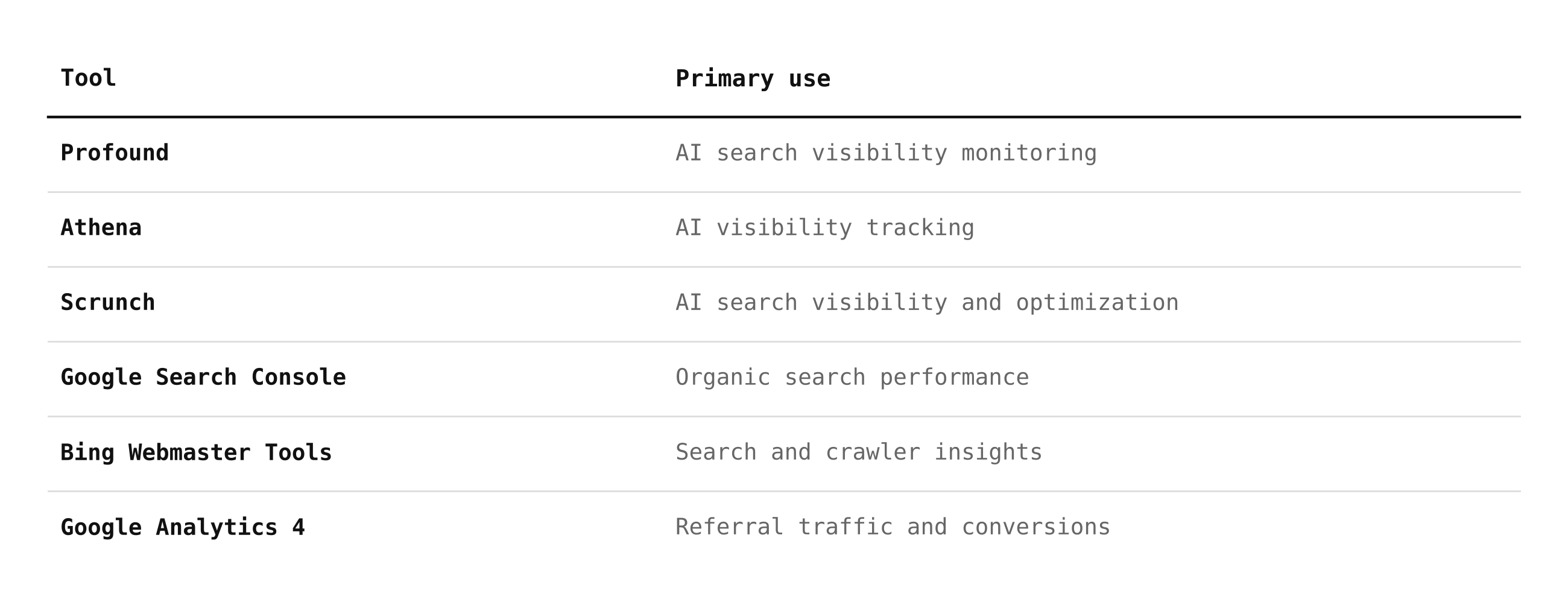
You can also develop custom workflows using LLM APIs to evaluate brand visibility across a consistent set of queries.
Just remember that AI-generated answers can vary between runs, locations, and user contexts. Use repeatable testing conditions and treat visibility measurements as directional indicators rather than perfectly stable rankings.
The takeaway: Track more than citations. Connect AI visibility to referral traffic, engagement, and qualified business outcomes.
5. Experiments & Platform-Specific Tests (4–8%)
AEO and GEO are still evolving.
There isn’t one optimization technique that guarantees visibility across every AI-powered platform.
What works for one query in ChatGPT might not produce the same outcome in Perplexity or Google’s AI search experiences.
That’s why experimentation needs a place in your budget.
What should you experiment with?
1. Content structure testing
Test different content formats:
- Answer-first versus traditional introductions.
- Comparison tables versus long-form paragraphs.
- Expert quotations versus generic explanations.
- Original research versus aggregated statistics.
- Short answers versus detailed supporting explanations.
Measure the impact on relevant visibility and engagement signals.
2. Platform-specific testing
Evaluate your brand independently across ChatGPT, Perplexity, Gemini, and other relevant platforms.
Look at:
- Which content formats get cited?
- Which domains appear frequently?
- What types of questions trigger brand mentions?
- Which competitor pages are referenced?
- How does visibility change after content updates?
Don’t assume a successful experiment on one platform will automatically work everywhere.
3. Source and citation analysis
Study the sources that appear in AI-generated answers for your target queries.
Look for recurring patterns:
- Are industry publications frequently cited?
- Do comparison websites appear regularly?
- Are Reddit discussions referenced?
- Does original research receive citations?
- Are product documentation pages appearing in technical answers?
Use these findings to identify content gaps and authority-building opportunities.
4. New platform and format experiments
Keep a small budget available for testing new AI search experiences, emerging discovery channels, and new measurement approaches.
Not every experiment will work. That’s the point.
You want to discover what creates measurable value before investing heavily in it.
The takeaway: Experiment consistently, document the results, and scale the activities that demonstrate meaningful improvements.
What to Prioritize in 2027: Query Fan-Out and Search Intent Coverage
There’s another area AEO teams should pay closer attention to: query fan-out.
When an AI-powered search experience processes a complex question, it may expand the original request into multiple related searches to gather supporting information.
For example, someone asks:
“What’s the best enterprise AI orchestration platform?”
Related research questions could include:
- What is enterprise AI orchestration?
- Which platforms support enterprise deployment?
- How do different platforms compare?
- What are the pricing and licensing options?
- Which platforms offer security and governance?
- What integrations are available?
- Which solutions are suitable for regulated industries?
These related questions can influence the information retrieved and the sources used to construct an answer.
This creates an important content opportunity.
If your website only targets the original headline query, you might miss several related questions that matter during the buyer’s research process.
Three ways to prepare
1. Build content around related questions
Map the questions surrounding your primary topics.
Don’t just target one keyword. Cover the related information buyers need to understand, compare, and evaluate solutions.
2. Connect content with a strong internal linking structure
Make relationships between your pages clear.
A product page should connect to relevant implementation guides, industry use cases, documentation, and comparison resources.
This helps users navigate your content and provides search systems with additional contextual relationships.
3. Expand third-party authority
Related searches often involve different types of information sources.
A buyer researching enterprise software might encounter analyst reports, customer reviews, technical documentation, industry publications, and community discussions.
Build a presence across the sources relevant to your category.
The bigger opportunity: Move from optimizing individual keywords to building coverage around complete search journeys.
How to Allocate Your AEO Budget: A Practical Example
Let’s make the framework more practical.
Imagine you’re a B2B SaaS company planning a yearly AEO investment of $100,000.
Here’s how the recommended framework could translate into actual spending.
ToolPrimary useProfoundAI search visibility monitoringAthenaAI visibility trackingScrunchAI search visibility and optimizationGoogle Search ConsoleOrganic search performanceBing Webmaster ToolsSearch and crawler insightsGoogle Analytics 4Referral traffic and conversions
This is an illustrative budget, not a universal spending prescription.
A company with a technically weak website may need to invest more in infrastructure initially. A brand with strong content but limited external recognition may benefit from increasing its third-party authority investment.
The right allocation depends on where your biggest visibility gaps exist.
The 2027 AEO Execution Roadmap
Budget allocation is only half the job. You also need a practical execution sequence.
Here’s a starting roadmap for a B2B marketing team.
Phase 1: Establish the foundation
- Audit website crawlability and indexability.
- Review structured data implementation.
- Identify important technical issues.
- Establish baseline AI visibility.
- Map priority buyer queries.
- Analyse competitor visibility.
Phase 2: Strengthen content and authority
- Refresh existing high-value content.
- Publish original research.
- Build industry-specific content clusters.
- Improve product and comparison pages.
- Develop customer case studies.
- Strengthen review platform presence.
Phase 3: Expand external visibility
- Launch digital PR campaigns.
- Participate in relevant communities.
- Develop expert-led content.
- Build analyst relationships.
- Explore relevant podcast and video opportunities.
Phase 4: Measure and optimize
- Monitor AI citations and mentions.
- Track competitor share of voice.
- Analyse AI referral traffic.
- Review query-level visibility.
- Identify content gaps.
- Scale successful experiments.
AEO should be an ongoing operating process rather than a one-time optimization project.
Final Thoughts: Build for Discoverability, Authority, and Trust
The biggest mistake founders can make in 2027 is treating AI search as another channel where they simply need to publish more content.
That’s not the whole picture.
Your brand needs to be discoverable through technically accessible content, supported by credible information, recognized across relevant external sources, and consistently measured against business outcomes.
The five-bucket framework gives marketing teams a starting point:
- Invest in original content that answers real questions.
- Build credibility through independent sources.
- Maintain a technically accessible website.
- Measure AI visibility alongside traditional SEO performance.
- Experiment with emerging discovery opportunities.
You don’t need to invest equally in everything from day one.
Start by identifying where your brand is losing visibility, understand what your competitors are doing differently, and allocate resources toward the biggest opportunities.
The brands that approach AEO as a long-term investment in content, authority, and technical readiness will be better positioned to compete as search continues to evolve.
And that’s the real goal for 2027: not just getting found, but becoming a source people and AI-powered discovery experiences can confidently turn to.